
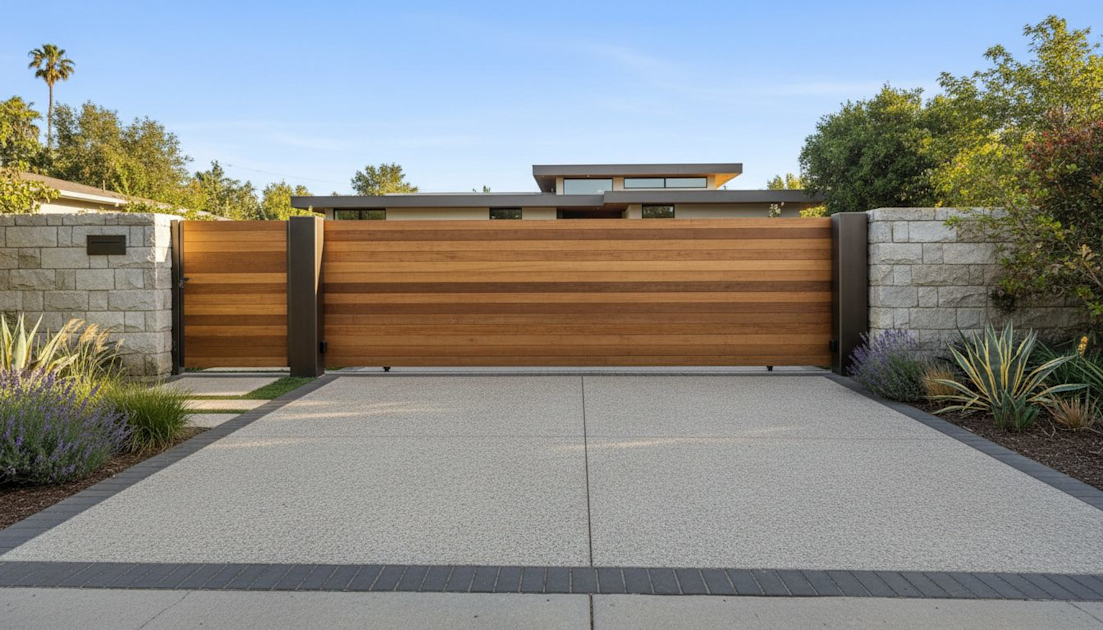


Quick Answer: In Sacramento, a professionally installed, automated driveway gate system typically costs between $8,000 and $30,000, with custom designs and advanced access control systems often exceeding $50,000. This range includes the gate structure, operator, safety devices, basic access control, and professional installation by a licensed C-13 contractor like DC Controls.
What Drives Driveway Gate Costs in Sacramento?
The total cost of a driveway gate in Sacramento is influenced by several critical factors, ranging from the gate’s fundamental design to the sophistication of its automation and access control. Understanding these elements helps you budget accurately and choose a system that meets your security, aesthetic, and functional needs.
Gate Type and Material
The gate itself is the most visible component, and its style, size, and material significantly impact the price.
- Basic Steel or Aluminum Gates: For standard designs, these might start in the $3,000 to $8,000 range for the gate structure alone. Steel offers robust security and durability, while aluminum is lighter, corrosion-resistant, and often more cost-effective for larger spans.
- Wood Gates: Wood offers a classic, natural aesthetic that many Sacramento homeowners prefer. However, wood gates require more maintenance and can be heavier, necessitating a more powerful (and often more expensive) operator. Costs typically range from $4,000 to $12,000+ for the gate structure, depending on wood species (cedar, redwood, exotic hardwoods), custom detailing, and size.
- Custom or Ornamental Gates: Intricate designs, wrought iron, or specialty materials can elevate costs considerably, often starting at $10,000 and easily reaching $25,000 or more for complex, hand-fabricated pieces.
Gate Operator (Motor)
The operator, or motor, is the workhorse of your automated gate system. Its cost depends on the gate’s weight, length, duty cycle (how often it needs to open and close), and power source.
- Residential Operators: For typical Sacramento homes, operators like the LiftMaster LA400 or DoorKing 9024 are common, ranging from $1,500 to $3,000 for the unit itself. These are designed for lower duty cycles.
- Heavy-Duty or Commercial Operators: For larger, heavier gates or those with high traffic (e.g., apartment complexes, gated communities), commercial-grade operators such as a LiftMaster LA500, HySecurity SlideDriver, or DoorKing 9150 are necessary. These can cost $3,000 to $8,000+ for the unit due to their robust construction, higher horsepower, and advanced features like AC hydraulic or heavy-duty gearboxes, designed for continuous operation and longevity.
- Power Source: AC (alternating current) operators are common, but DC (direct current) operators with battery backup are increasingly popular in areas prone to Public Safety Power Shutoffs (PSPS) in the Sacramento region, offering continued operation during outages. This adds to the initial cost but provides crucial reliability.
Access Control Systems
Beyond simply opening and closing, access control determines who can enter and how. This is a highly variable cost component.
- Basic Entry: A simple keypad or remote control system might add $300 to $1,000. Brands like Linear, DoorKing, or LiftMaster offer reliable options.
- Advanced Systems: For greater security and convenience, options include:
- Telephone Entry Systems: Like the DoorKing 1838 or LiftMaster EL25, allowing visitors to call your phone for access, typically $1,500 to $4,000+.
- Card Readers/FOBs: Ideal for multiple authorized users, adding $500 to $2,000+.
- Loop Detectors: For automatic exit, preventing accidental closings, or free exit, typically $300 to $800 per loop.
- Cellular/Internet Integration: Allowing remote management and access via smartphone apps, adding $500 to $1,500+ plus potential monthly fees.
- Biometric Readers: Fingerprint or facial recognition, a high-security option starting at $2,000+.
Installation Complexity & Site Preparation
The physical characteristics of your Sacramento property play a significant role in installation costs.
- Groundwork: Excavation, trenching for electrical lines and low-voltage wiring, and concrete work for pads and footings can add $1,500 to $5,000 or more, especially if rock or challenging terrain is encountered.
- Electrical Work: Bringing dedicated power to the gate location is essential. If a power source is far from the gate, extensive trenching and conduit work will increase costs. We ensure all electrical work complies with local Sacramento building codes and CA Title 24.
- Gate Posts: Proper, sturdy gate posts are critical for the gate’s longevity and safe operation. These often require significant concrete foundations.
- Permitting: Depending on the gate’s size and electrical requirements, permits from Sacramento County or your local municipality are often required. We handle the permitting process to ensure compliance.
Permitting and Code Compliance
As a licensed C-13 contractor (CA License #1114559), DC Controls always ensures our installations meet all local and state regulations.
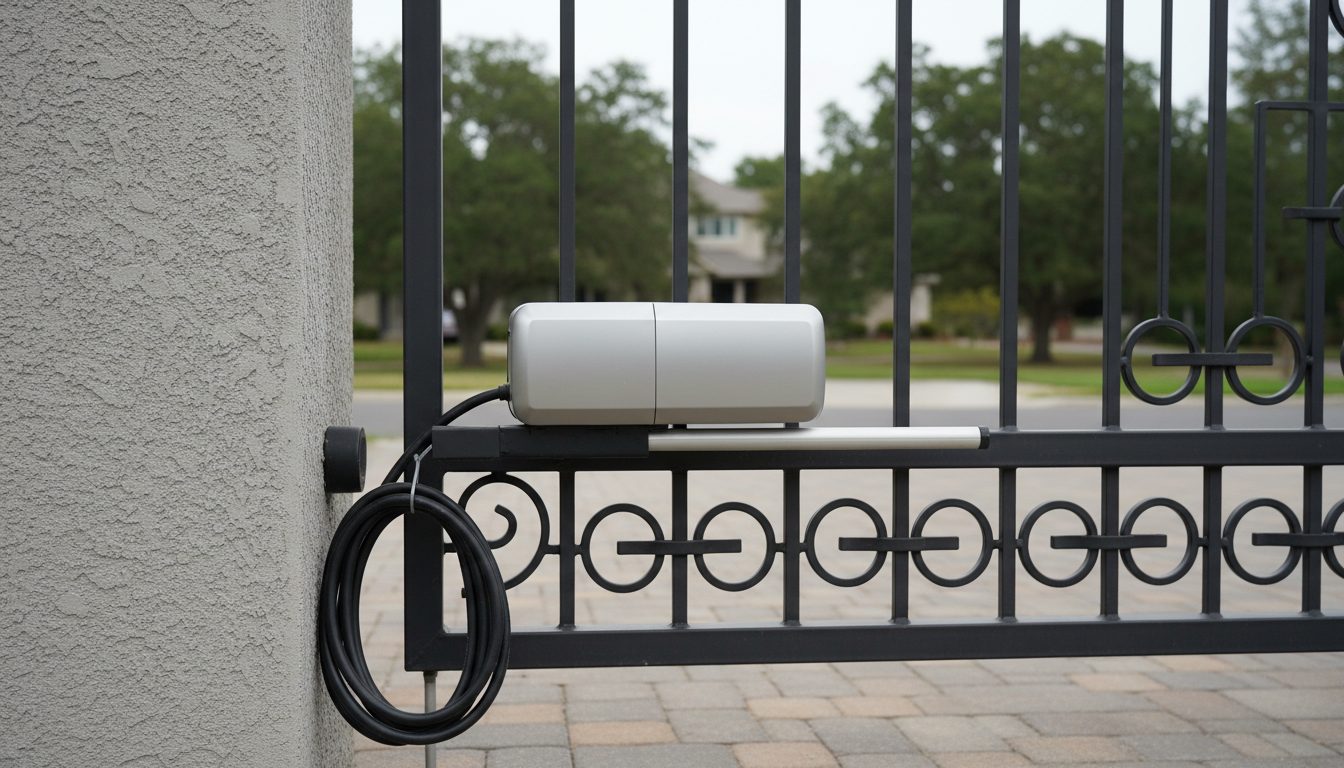
- UL 325 Safety Standards: All automated gate systems we install strictly adhere to UL 325 safety standards, which mandate specific safety devices (like photo-eyes and sensing edges) to prevent entrapment and injury. This is non-negotiable and adds to the system cost but is crucial for safety and liability.
- Local Building Codes: Sacramento County and surrounding cities have specific requirements for gate setbacks, heights, and electrical installations. Obtaining the necessary permits (electrical, possibly structural) is a standard part of our process and typically costs a few hundred dollars, but ensures your gate is legally and safely installed.
A properly installed, UL 325 compliant gate system is an investment in safety, not just security.
Comparing Driveway Gate Types: Swing vs. Slide
Choosing between a swing and slide gate is one of the most fundamental decisions you’ll make, heavily influencing both the aesthetics and functionality of your system, as well as the cost. DC Controls can help you determine which type is best suited for your Sacramento property’s layout and needs.
Swing Gates
Swing gates operate like a door, pivoting open either inward or outward. They are often favored for their classic, elegant appearance.
Pros:
- Aesthetics: Often seen as more traditional and visually appealing, especially for ornamental designs.
- Less Space Along Fence Line: Requires less linear space along your fence compared to slide gates.
- Quieter Operation: Generally operate with less noise than slide gates.
- Simpler Installation: Can sometimes be simpler to install if the ground is perfectly level.
Cons:
- Space Requirements: Need a large clear area for the gate to swing open, which can be problematic for driveways with inclines, limited space, or where vehicles park close to the gate.
- Snow/Debris Clearance: Obstructions like snow, leaves, or gravel can impede operation. While less of an issue in Sacramento’s climate, heavy leaf fall can be a factor.
- Wind Resistance: Large swing gates can be more susceptible to wind stress, requiring heavy-duty hinges and operators.
- Operator Type: Typically use arm-style or underground operators (e.g., LiftMaster LA412, FAAC 400 series).
Slide Gates
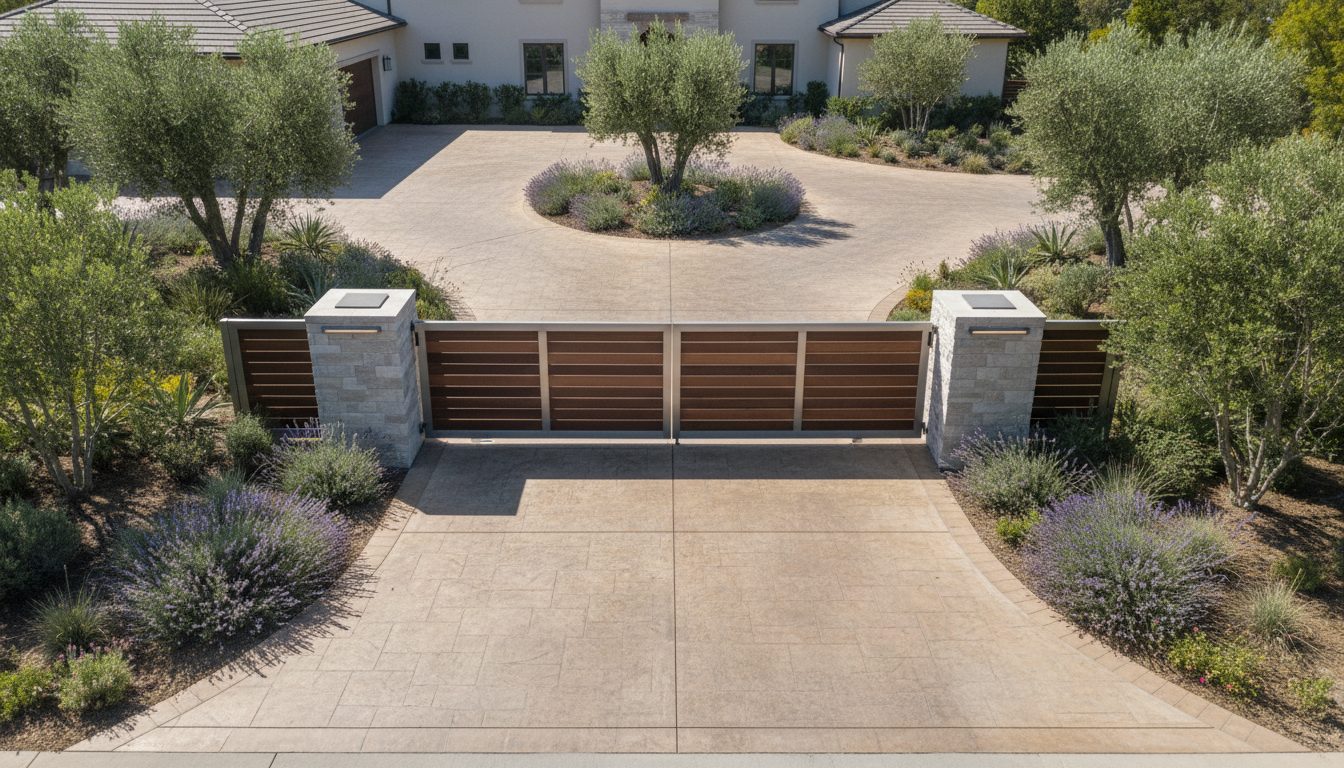
Slide gates run parallel to your fence line, moving horizontally to open and close. They are a practical choice for many properties, especially those with limited swing space.
Pros:
- Space Efficiency: Ideal for properties with limited depth, sloped driveways, or where vehicles need to park close to the gate.
- Security: Often considered more secure as they are harder to force open due to their linear movement and locking mechanisms.
- Weather Resistance: Less affected by wind and ground-level obstructions.
- Operator Type: Can use various operators, including chain-driven (LiftMaster Mega Slide, SL3000), gear-driven, or cantilever systems.
Cons:
- Linear Space Required: Needs sufficient linear space along the fence line for the gate to retract fully (typically the gate’s width plus 1-2 feet).
- Aesthetics: Can appear less “grand” than swing gates, although modern designs have improved significantly.
- Guide System: Requires a track (V-track) or a cantilever system, which adds complexity and cost.
- V-track: Requires a V-groove wheel and a track embedded in the driveway. Prone to debris accumulation.
- Cantilever: Suspends the gate above the driveway, eliminating the need for a track on the ground. More expensive but smoother and lower maintenance.
- Potential for Noise: Can be noisier than swing gates, especially V-track systems if not well-maintained.
Essential Components of a Complete Automated Gate System
A driveway gate is more than just a barrier; it’s a sophisticated system designed for security, convenience, and above all, safety. As experienced Sacramento gate contractors, we emphasize the importance of every component working together seamlessly.
Safety Devices (UL 325 Compliance)
Safety is paramount. UL 325 is the industry standard for gate operator safety, mandating specific entrapment protection devices. DC Controls ensures every installation is compliant.
- Photo-Eyes (Photocells): These infrared beams detect obstructions in the gate’s path. If the beam is broken while the gate is closing, it will stop or reverse. We typically install multiple sets, often on both the interior and exterior of the gate, to cover all potential entrapment zones.
- Sensing Edges: Pressure-sensitive strips mounted directly on the gate’s leading edges. If the gate makes contact with an obstruction, the edge detects the pressure and signals the operator to stop or reverse. These are crucial for protecting against crushing hazards.
- Auto-Reverse Mechanism: All modern UL 325 compliant operators have this built-in, but it relies on properly installed and calibrated photo-eyes and sensing edges to function effectively.
Power and Wiring
Reliable power is the backbone of any automated gate.
- Dedicated Electrical Circuit: The gate operator requires a dedicated 120V AC circuit, often run from your home’s main electrical panel. Proper trenching and conduit protect these lines from damage and weather.
- Low-Voltage Wiring: For access control devices (keypads, intercoms, photo-eyes), low-voltage wiring is routed, often alongside the power lines, but kept separate to prevent interference.
- Battery Backup: Especially relevant in the Sacramento region due to PSPS events, a battery backup system allows your gate to operate during power outages. Many modern DC operators come with integrated battery backup capabilities.
Peripheral Accessories
These devices enhance the functionality and convenience of your gate system.
- Keypads: Allow entry via a numeric code. Often mounted on a pedestal for easy access from a vehicle.
- Remote Controls (Transmitters): Handheld devices for opening and closing the gate from your car.
- Intercom Systems: Allow two-way communication with visitors at the gate, often integrated with a telephone entry system.
- Loop Detectors: Inductive loops buried under the driveway that detect the presence of a vehicle, triggering the gate to open or preventing it from closing. Essential for free exit.
- Timers to Close: Automatically closes the gate after a set period, enhancing security.
- Safety Beacons/Strobe Lights: Provide visual warning when the gate is in motion.
{{IMAGE_PLACEHADER_2}}
Sacramento-Specific Considerations for Your Driveway Gate Project
Installing a driveway gate in the Central Valley comes with unique challenges and opportunities. Our local expertise ensures your system is designed to thrive in Sacramento’s environment.
Climate Impacts on Gate Longevity
Sacramento’s hot, dry summers and occasional winter rains demand specific considerations for gate materials and finishes.
- Heat and UV Exposure: Intense summer sun can degrade paint, stain, and some plastic components over time. We recommend powder-coated finishes for steel and aluminum for superior durability and UV resistance. For wood gates, proper sealing and staining are critical to prevent warping and cracking.
- Dust and Debris: The Central Valley’s agricultural surroundings and dry conditions mean dust can be a factor. This can impact operator mechanisms and V-track slide gates. Regular maintenance and choosing enclosed operators are beneficial.
- Expansion and Contraction: Extreme temperature swings can cause materials to expand and contract. Our installations account for this, using appropriate gaps and materials to prevent binding or stress on the system.
Navigating Local Permitting in Sacramento County
Depending on your exact location within Sacramento County (city limits, unincorporated areas, or surrounding municipalities like Elk Grove, Folsom, or Roseville), permitting requirements can vary.
- Building Permits: For larger gates, significant structural work, or new electrical runs, a building permit is usually required. This ensures the installation meets local safety and structural standards.
- Electrical Permits: Any new electrical wiring or connections to your home’s power supply will necessitate an electrical permit.
- Professional Guidance: DC Controls handles the entire permitting process, from application to final inspection, ensuring your project complies with all local ordinances. This saves you time and prevents costly delays or violations.
PSPS Events and Battery Backup
Public Safety Power Shutoffs (PSPS) have become a reality for many Sacramento-area residents.
- Uninterrupted Access: During these planned power outages, a gate without battery backup becomes a manual gate, potentially leaving you unable to enter or exit your property.
- DC Operators with Battery Backup: We strongly recommend DC (direct current) operators that integrate battery backup systems. These systems automatically switch to battery power during an outage, providing numerous cycles of operation (often 50-100+ cycles) before needing to be recharged or replaced. This ensures your security and convenience are maintained even when the grid is down.
Avoiding Common Mistakes and Ensuring a Professional Installation
A driveway gate is a significant investment in your property’s security and curb appeal. Avoiding common pitfalls and entrusting your project to a qualified professional ensures a safe, reliable, and long-lasting system.
The Dangers of DIY or Unlicensed Work
While online tutorials might suggest otherwise, installing an automated driveway gate is complex and carries substantial risks if not done correctly.
- Safety Hazards: Improperly installed operators or lack of UL 325 compliant safety devices can lead to severe injury or even fatalities due to entrapment or crushing. These systems are powerful and unforgiving.
- Code Violations: Unlicensed work often bypasses necessary permits and inspections, leading to code violations that can result in fines, forced removal, or difficulties when selling your property.
- Equipment Damage: Incorrect wiring, improper operator sizing, or poor gate fabrication can quickly lead to premature failure of expensive components.
- No Warranty/Liability: DIY projects typically void manufacturer warranties. If an accident occurs due to an unlicensed installation, you bear full liability.
Understanding Duty Cycle and Operator Sizing
One of the most common mistakes we see is selecting an operator that isn’t matched to the gate’s usage.
- Duty Cycle: This refers to how frequently an operator can open and close the gate without overheating or excessive wear.
- Residential (Low Duty): For homes with 5-10 cycles per day, a standard residential operator (e.g., LiftMaster LA400) is sufficient.
- Commercial/High Traffic (High Duty): For apartment complexes, businesses, or busy residential estates with 50-100+ cycles per day, a heavy-duty commercial operator (e.g., HySecurity StrongArm, LiftMaster Mega Slide) is essential. These are built with more robust components, larger motors, and often hydraulic or industrial-grade gearboxes to withstand constant use.
- Gate Weight and Length: An operator must be powerful enough to move the gate smoothly and safely. An undersized operator will strain, wear out quickly, and may not meet safety reversal requirements. We always calculate the precise force required, considering the gate’s material, dimensions, and potential wind load.
The Importance of a Licensed Contractor (C-13)
Choosing a licensed, bonded, and insured C-13 (low voltage) contractor like DC Controls (CA C-13 License #1114559) offers peace of mind and guarantees a professional outcome.
- Expertise: We possess the specific knowledge and experience in gate automation, electrical work, and local code compliance.
- Safety: Our installations adhere strictly to UL 325 safety standards, protecting your family and visitors.
- Reliability: We use high-quality, durable components from reputable brands and stand behind our work with warranties.
- Troubleshooting: Should an issue arise, we have the diagnostic tools and expertise to resolve it efficiently.
- Long-Term Support: We offer ongoing maintenance and repair services, ensuring your gate system remains operational for years to come.
Don’t compromise on safety or expertise. A professional installation ensures your gate is an asset, not a liability.
Frequently Asked Questions
How long does a typical driveway gate installation take in Sacramento?
Most standard residential gate installations, including the gate, operator, and basic access control, can be completed by DC Controls within 3-7 days, depending on site preparation, electrical work, and the complexity of the system. Custom gates or extensive groundwork may extend this timeline.
What kind of maintenance does an automated gate system require?
Automated gates benefit from annual professional maintenance, including checking moving parts, lubricating hinges, inspecting electrical connections, testing safety devices, and clearing debris from tracks or sensors. This proactive approach prevents costly breakdowns and extends the system’s lifespan.
Can I integrate my driveway gate with my smart home system?
Yes, many modern gate operators and access control systems offer integration capabilities with popular smart home platforms. This allows for remote operation, status monitoring, and even custom automation routines, enhancing convenience and security.
What is the lifespan of an automated driveway gate operator?
With proper installation and regular maintenance, a high-quality residential gate operator typically lasts 7-10 years. Commercial-grade operators, designed for higher duty cycles, can often exceed 10-15 years. Environmental factors like extreme Sacramento heat and dust can influence longevity.
Are there financing options available for driveway gate installations?
Many contractors, including DC Controls, offer or can recommend financing options for larger gate projects. It’s always best to discuss payment plans and financing early in the consultation process to understand your options.
What if my gate stops working during a power outage?
If you have a DC operator with a battery backup system, your gate should continue to function for a limited number of cycles. If you have an AC operator without backup, or if the battery is depleted, most operators have a manual release mechanism to allow you to open and close the gate by hand.
Ready to Secure Your Sacramento Property?
Investing in an automated driveway gate system is a smart decision for enhancing security, privacy, and property value in the Sacramento area. At DC Controls, we pride ourselves on delivering custom, high-quality gate solutions tailored to your specific needs and budget. As a licensed and experienced C-13 contractor, we ensure every installation meets the highest standards of safety, reliability, and craftsmanship. Contact us today for a personalized consultation and let us help you design the perfect gate system for your home or business.


